About Rongai Route
The Rongai Route is one of the most peaceful and scenic routes on Mount Kilimanjaro. It starts from the northern side near the Kenyan border and offers a gradual ascent with fewer climbers. This route is ideal for those who prefer a quieter climb and want a higher chance of success due to better acclimatization.
The 7-day itinerary provides a comfortable pace and allows you to experience diverse landscapes including rainforest, moorland, alpine desert, and the stunning summit zone.
Quick Safari Facts
- Duration: 7 Days / 6 Nights
- Route Type: Moderate
- Success Rate: Very high
- Starting Point: Rongai Gate
- Ending Point: Mweka Gate
Safari Itinerary
Day 1: Rongai Gate – Rongai Camp
Distance: 8 km
Duration: 4–5 hours
Altitude: 1,950 m → 2,650 m
You start through the lush rainforest and reach Rongai Camp for dinner and overnight.
Day 2: Rongai Camp – Kikelewa Camp
Distance: 8 km
Duration: 5–6 hours
Altitude: 2,650 m → 3,600 m
The trail climbs steadily through moorland with beautiful views of Kibo and Mawenzi peaks.
Day 3: Kikelewa Camp – Mawenzi Tarn Camp
Distance: 6 km
Duration: 4–5 hours
Altitude: 3,600 m → 3,850 m
You reach the scenic Mawenzi Tarn with panoramic views of the mountain and a calm environment.
Day 4: Mawenzi Tarn – Kikelelwa Camp
Distance: 6 km
Duration: 4–5 hours
Altitude: 3,850 m → 3,600 m
This day is for acclimatization as you descend back to Kikelewa Camp, helping your body adjust for the summit push.
Day 5: Kikelelwa Camp – School Hut
Distance: 8 km
Duration: 5–6 hours
Altitude: 3,600 m → 4,750 m
The trail moves through alpine desert and reaches School Hut, a key staging point for the summit attempt.
Day 6: School Hut – Summit – Millenium Camp
Summit: Uhuru Peak (5,895 m)
Duration: 12–15 hours
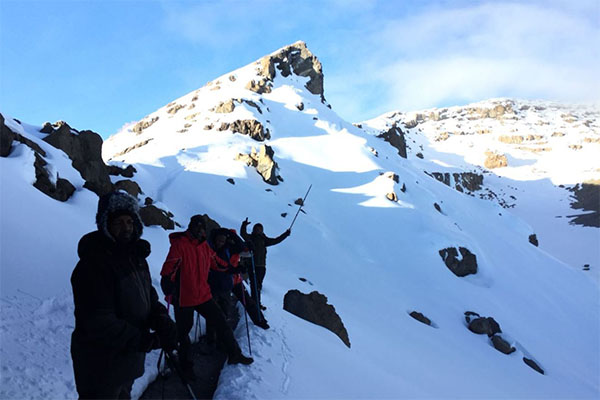
You begin the final ascent around midnight, reaching the summit at sunrise. After the celebration, descend to Millenium Camp for rest.
Day 7: Millenium Camp – Mweka Gate – Arusha
Distance: 10 km
Duration: 4–5 hours
You descend through the rainforest to Mweka Gate. After certificates and photos, you return to Arusha.
What’s Included
Experienced mountain guide
Cook and support staff
Porters for luggage
Park fees and camping fees
All meals on the mountain
Tents, sleeping mats, and camping equipment
Rescue and emergency support
What’s Not Included
Kilimanjaro National Park rescue fees
Personal hiking gear
Tips for guides and porters
Travel insurance
Flights to Tanzania
Best Time to Climb
January – March: Dry season, clear views
June – October: Best weather and stable conditions
November – mid-December: Short rainy season
Fitness Requirement
Moderate to high fitness level
Regular hiking or gym training recommended
Ability to walk 6–8 hours per day at altitude